
Keyword Search
Latest Articles
What Is qmax? Understanding the JIS Standard for Evaluating Instant Cooling Sensation
At the Forefront of Tactile Research: KATO TECH × Keio University — Joint Presentation with Professor Kenjiro Takemura. Two Leaders in Tactile Science Discuss the Current State of Evaluation Technologies — New Developments in the Automotive Industry.
Category
Archive

Release Date:2026.03.11
Last Updated:2026.03.12


In recent years, cool-touch functional materials have become widely used in products ranging from apparel to bedding. As these materials have become more common, the term qmax—a key indicator used to evaluate their cooling performance—has also gained broader recognition.
The qmax value represents the maximum heat flux1 from the skin to a fabric upon initial contact. A higher value indicates that heat is absorbed more rapidly from the skin, resulting in a stronger cooling sensation.
In the research and development of textile products—particularly those designed for thermal comfort and heat management—accurate evaluation of qmax plays a critical role.
However, understanding this indicator requires more than simply knowing its value. It is also important to understand what qmax represents, the standards that define it, and how it should be properly measured.
This article explains the fundamental concept of qmax and outlines the key points of the JIS standard used to evaluate instant cooling sensation2 in textile materials.
Instant cooling sensation refers to the cool feeling experienced when the skin first meets a material such as fabric.
The key factor behind this sensation is how quickly heat is transferred from the skin to the material.
For example, if you touch wood and metal kept at the same room temperature, the metal will feel significantly colder. This occurs because metal has higher thermal conductivity, allowing it to remove heat from the skin more rapidly than wood.
Textile materials designed to provide an instant cooling sensation utilize this principle of rapid heat transfer to create a refreshing feeling for the wearer.
When skin warmed by body temperature contacts a material that is cooler, heat naturally flows from the warmer surface to the cooler surface.
Cooling textile materials are designed to maximize heat transfer from the skin to the fabric upon initial contact.
As heat from the skin surface is absorbed by the material, the skin surface temperature drops rapidly, and the brain perceives this change as a cooling sensation.
To evaluate this objectively, the maximum heat flux, known as qmax, is used as a quantitative indicator.
Material properties such as thermal conductivity and thermal diffusivity significantly influence qmax.
qmax refers to the maximum heat flux, or the maximum rate of heat transfer per unit area, occurring upon initial contact between the skin and a material surface.
It is widely used as a quantitative indicator for evaluating the instant cooling sensation of textile materials.
A higher qmax indicates faster heat transfer from the skin, resulting in a stronger perceived cooling sensation.
The unit used to express qmax is typically W/cm² (watts per square centimeter).
This unit represents the maximum instantaneous heat flow per square centimeter during initial thermal contact.
In Japan, the official testing method used to evaluate the instant cooling sensation of textile products is defined by the standard:
JIS L 1927 [1] – Textiles-Measurement method of cool touch feeling property
This standard was established in February 2020.
The method was developed based on the KES-F7 3 Thermo Labo testing instrument manufactured by Kato Tech.
Similar standards have also been established internationally, including GB/T 35263-2017 (China), Textiles-Testing and evaluation for cool feeling in contact instant and CNS15687, L3272 (Taiwan) Method of test for the instantaneous cool sensation fabrics.
Under JIS L 1927, the characteristic value used to represent instant cooling sensation is defined as the maximum heat flux. This standard defines a material as having instant cooling sensation when its qmax value reaches or exceeds 0.100 W/c㎡.
According to the JIS testing method, measurement is performed under controlled thermal conditions.
A heat source plate (sensor) is set to a 10°C higher than the ambient environment. The heated plate is then brought into contact with a fabric sample maintained at room temperature.
Upon contact, transient heat transfer occurs between the heated plate and the textile sample. The maximum heat flux observed during this transient heat transfer process is recorded as qmax.
The measurement process also incorporates differential transformation methods and a first-order lag filter. These procedures account for the delay between heat transfer and human thermal perception, improving correlation with actual sensory responses and reflecting the time required for the brain to perceive cold through the skin.
Accurate measurement of qmax is essential for quantitatively evaluating the thermal performance of textile materials, and the reliability of these results directly influences research outcomes and product development quality.
Therefore, a dedicated tester is required to perform accurate measurements in accordance with JIS standards.
The KES-F7 Thermo Labo is part of the KES (Kawabata Evaluation System) series developed by Kato Tech.
This tester enables testing based on the method specified in JIS L 1927 for evaluating instant cooling sensation in textile products.
It measures the thermal sensations experienced when skin contacts a material, such as warmth or coolness.
Typical applications include evaluating cooling bedding materials for summer, cooling innerwear fabrics and warm-touch innerwear materials for winter.
In addition to measuring qmax, the KES-F7 Thermo Labo can also analyze various thermal properties of textiles, including thermal insulation, thermal conductivity and other heat-transfer characteristics (optional features).
For researchers, it is a fundamental tool not only for evaluating the single indicator of contact coolness but also for assessing the overall thermal properties of materials, thereby enabling more in-depth research on comfort and functionality.
For more information, please visit the link below.
KES-F7 Thermo Labo
.png)
The KES-F7 Thermo Labo is used to evaluate a wide range of materials and products, see the case studies at the links below.
・Cooling performance of innerwear
・Instant cooling sensation of mattress pads
・Cooling performance of cooling sheets
・Tactile evaluation of dry laundry
・Assessment of the moist texture of bread
・Thermal sensation of bathroom floor
・Cooling sensation after applying cosmetic products
Similar to the KES-F7 Thermo Labo, this tester measures contact thermal sensation.
The heat plate that contacts the sample is designed to replicate human touch conditions, including contact pressure and contact area, enabling measurements that closely reflect human sensory perception.
It automatically measures up to 10 consecutive tests. All measurement operations are controlled via a touch panel, and measurement conditions can be easily configured.
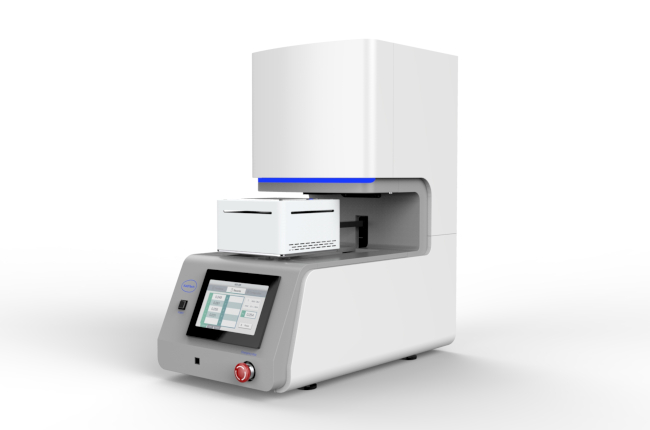
Please access to the link below for more information of KES-QM.
KES-QM Contact Thermal Sensation Tester
The case studies below demonstrate the use of the KES-QM for evaluating the contact cool/warm sensation of textiles.
Evaluation of contact thermal sensation of textiles
qmax represents the maximum transient heat flux at initial contact between the skin and a material surface and serves as a quantitative indicator of instant cooling sensation. A higher qmax indicates that heat is transferred more rapidly from the skin, resulting in a stronger cooling sensation.
In textile research and development, qmax is evaluated according to the JIS L 1927 standard, which requires measurements with precise control of temperature and pressure, along with specific filter processing
Proper use of measurement instruments and accurate evaluation of qmax are critical to the research, development, and quality control of high-performance textile products.
If you have any further questions about qmax, please do not hesitate to contact KATO TECH.
1. Maximum heat flux: The maximum heat flux occurring upon initial contact between a heated sensor plate and a textile sample. In Japanese technical literature, this parameter is often referred to as maximum heat absorption rate.
2. Instant Cooling Sensation: Translation of the Japanese textile engineering term 接触冷感 (sesshoku reikan), referring to the cool sensation perceived when skin first contacts a material surface. It is written as Cool Contact Feeling in official research paper.
3. KES (Kawabata Evaluation System): A measurement system developed by Professor Sueo Kawabata for evaluating the mechanical and thermal properties of textile materials.
[1] JIS L 1927: Testing Method for Evaluating Instant Cooling Sensation of Textile Products, Japanese Industrial Standards (JIS)